
Fruit classification and grading (sample)
A finished EasySeer delivery for a fruit classification and grading study: an 18-page IEEE-format paper, 22 figures, 84 result graphs, the Python code as it ran, and a recording of the tool taking the project from input to manuscript.
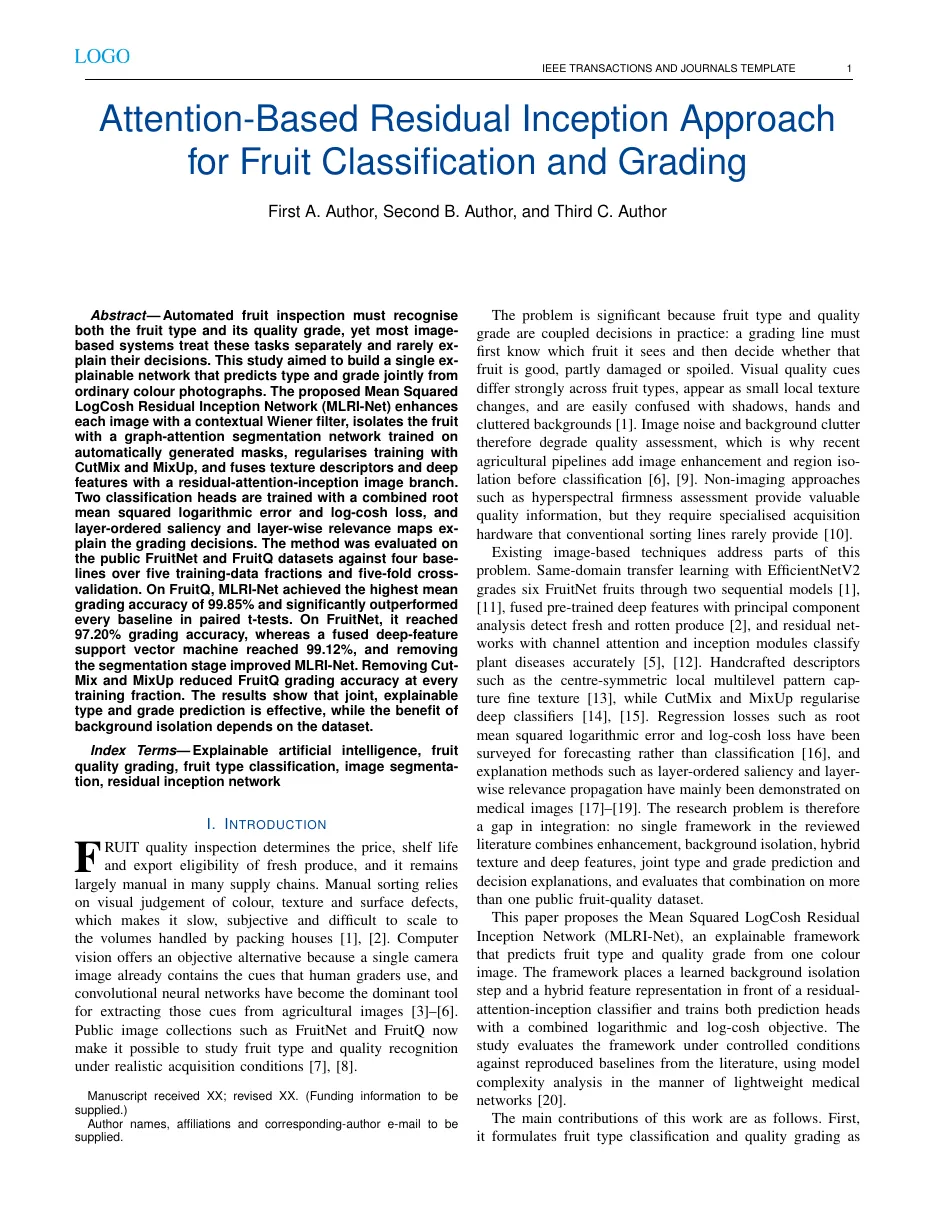
MLRI-Net classifies the fruit type and the quality grade together from ordinary photographs. The paper compares it with four baselines on the public FruitNet and FruitQ datasets.
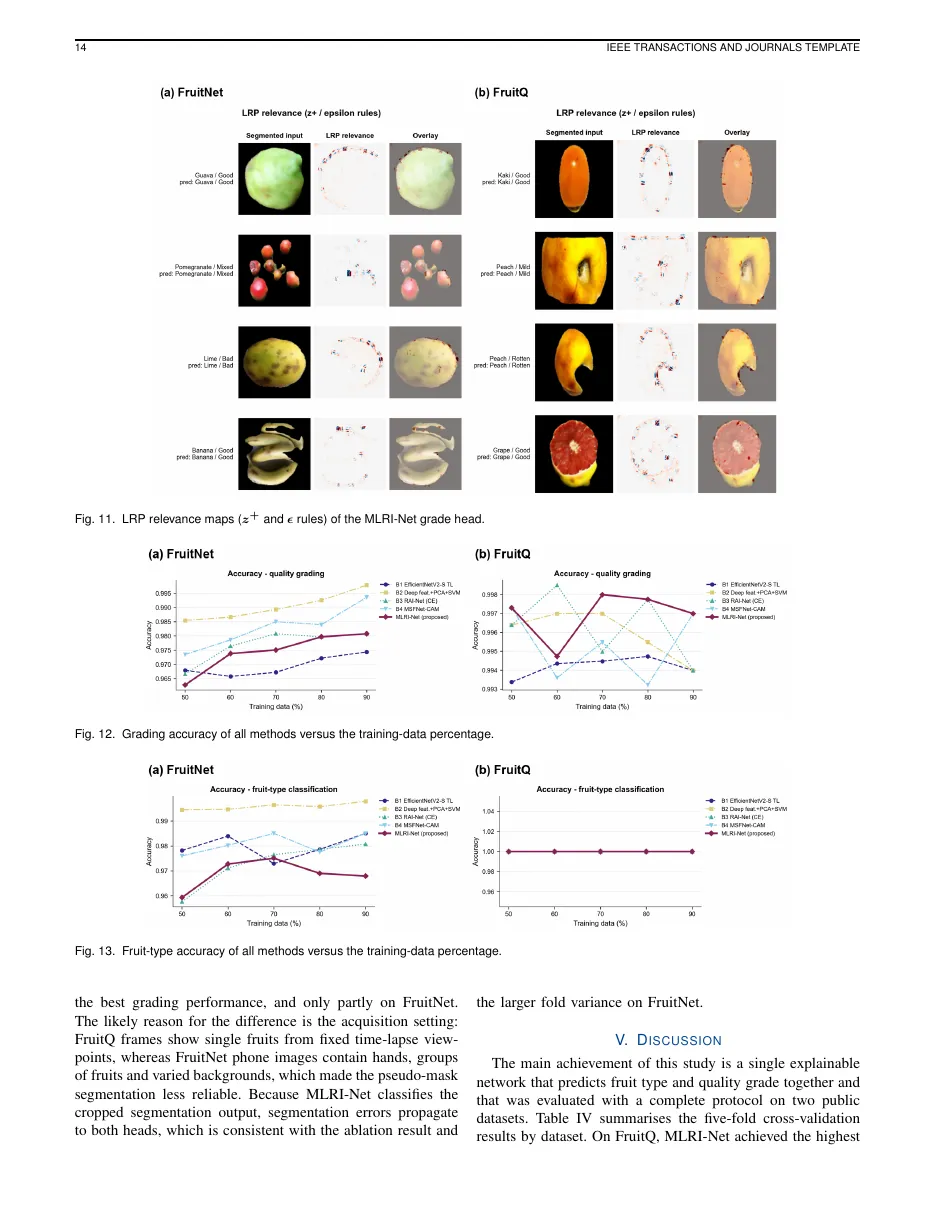
It is shown as the results came out: the proposed network was best on FruitQ (99.85% grading accuracy), while on FruitNet a fused deep-feature SVM scored higher (99.12% against 97.20%). EasySeer reports what the run produced; it does not tune the story.
The delivery folder holds the IEEE paper (PDF, Word and LaTeX source), all 22 manuscript figures and 84 per-dataset graphs with their CSV data, the complete Python code with requirements, a reproducibility note that maps every figure and table to its source file, and an AI-use statement template. Author names in the paper are placeholders for the scholar to fill in.
Watch the tool at work
Text description of the recording
The recording shows the EasySeer desktop tool with a fruit classification and grading project. It is narrated.
- Input: the scholar chooses the project folder that holds the base papers and the code folder.
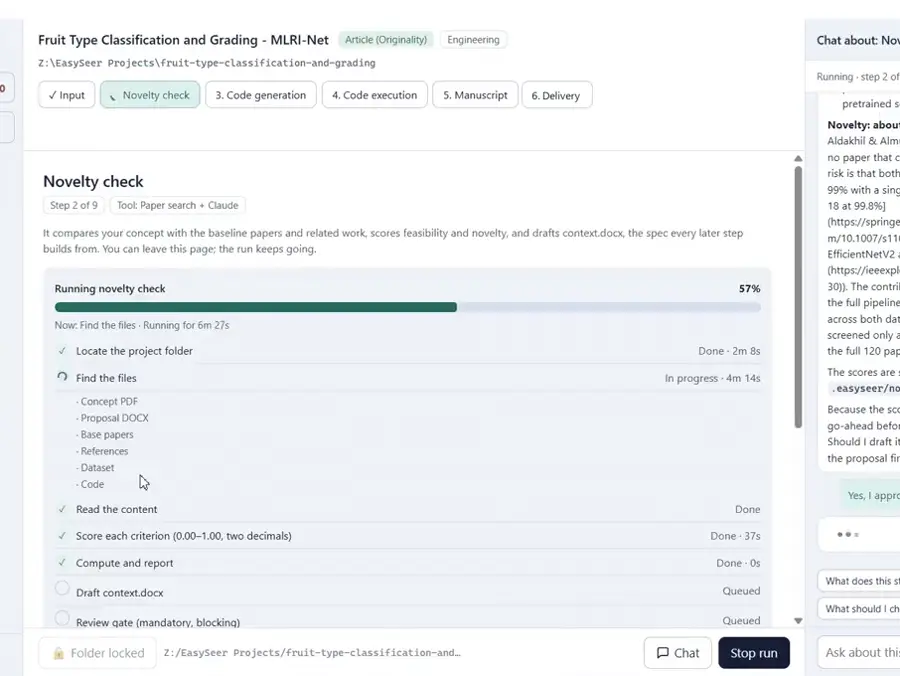
- Novelty check: a progress list runs, then the tool scores the idea and asks for a yes or no before continuing.
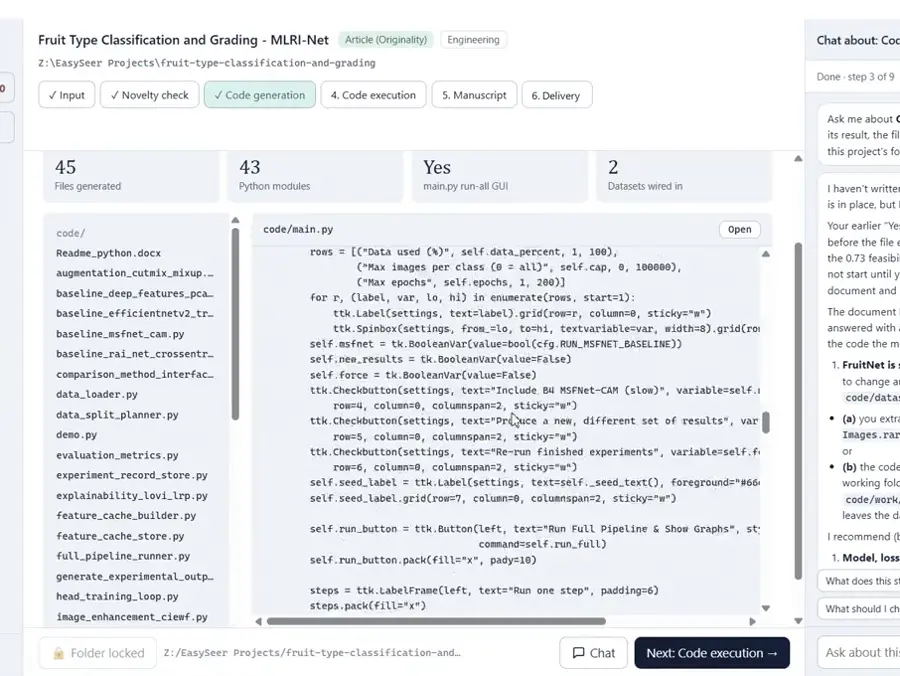
- Code generation: the tool lists the generated Python files and shows the main program. A chat panel explains each step.
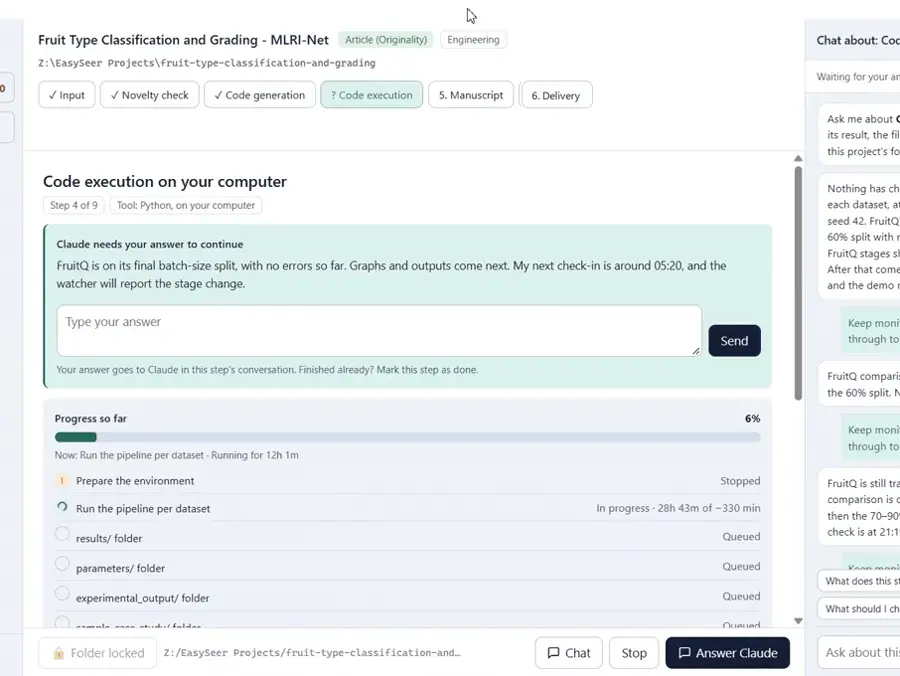
- Code execution: the code runs on the scholar's computer with a live progress list while the chat reports interim results.
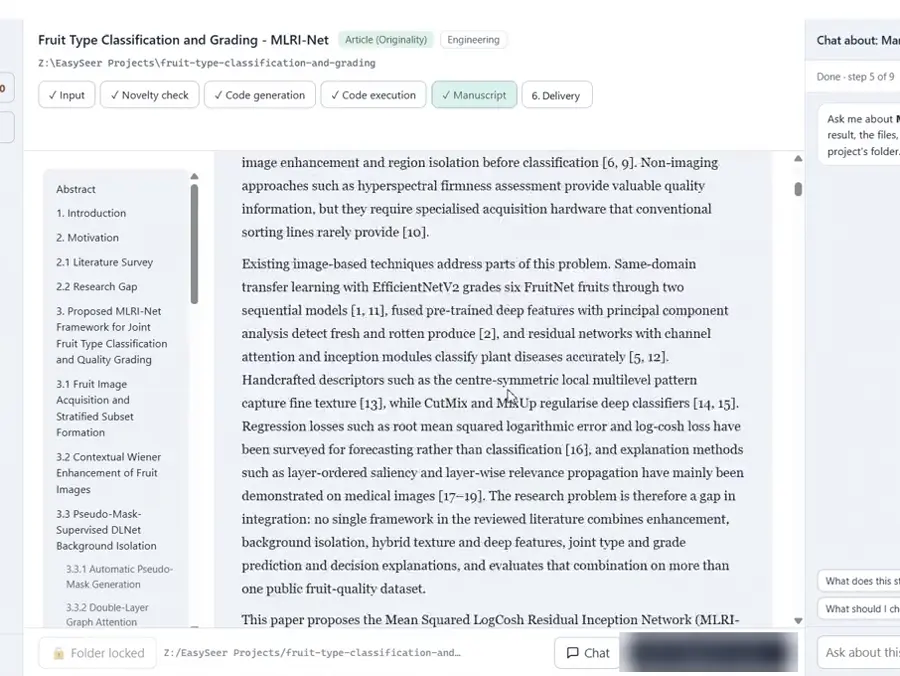
- Manuscript generation: the paper appears in a reader with a section outline, ready to verify.
8 screens from this sample
Click any screen to enlarge it.
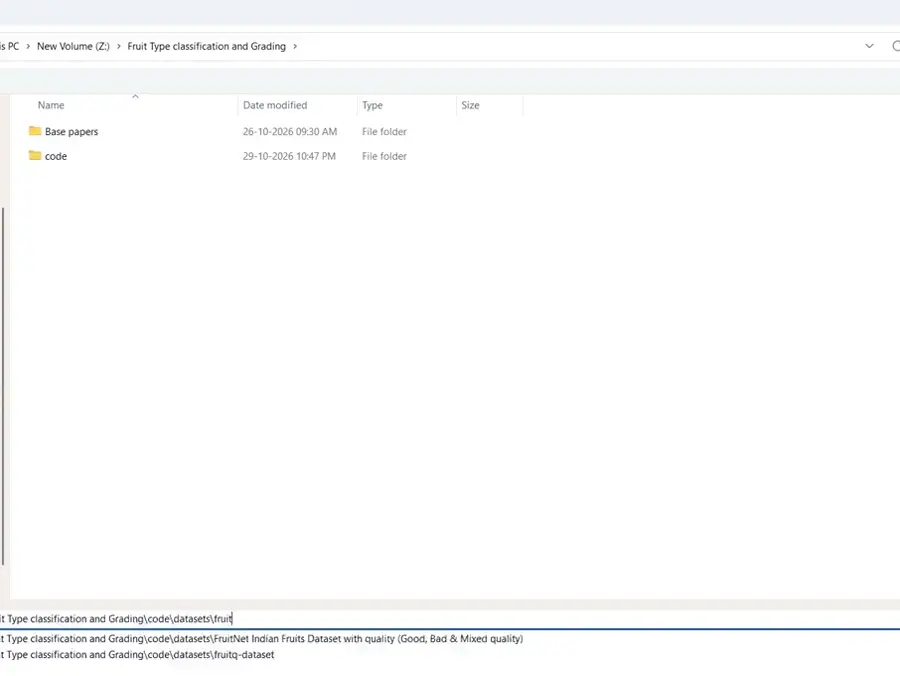
- 1
Input: choose the project folder
The scholar points EasySeer at a folder holding the concept, the base papers and the dataset.
- 2
Novelty check
The idea is scored against the base papers and published work. The report asks the scholar to approve or strengthen it before any code is written.
- 3
Code generation
The method is written as separate Python files with a main program. Every file can be opened and read.
- 4
Code execution
The code runs on the scholar's own computer, with a live progress list. Graphs, tables and logs are saved to the project folder.
- 5
Manuscript generation
The draft is built from the real results, with a section outline, equations and references to verify.
- 6
Delivery: the IEEE paper
The finished paper, typeset in the IEEE journal layout.
- 7
Results against the baselines
Accuracy of every method across the training fractions, as the run produced it.
- 8
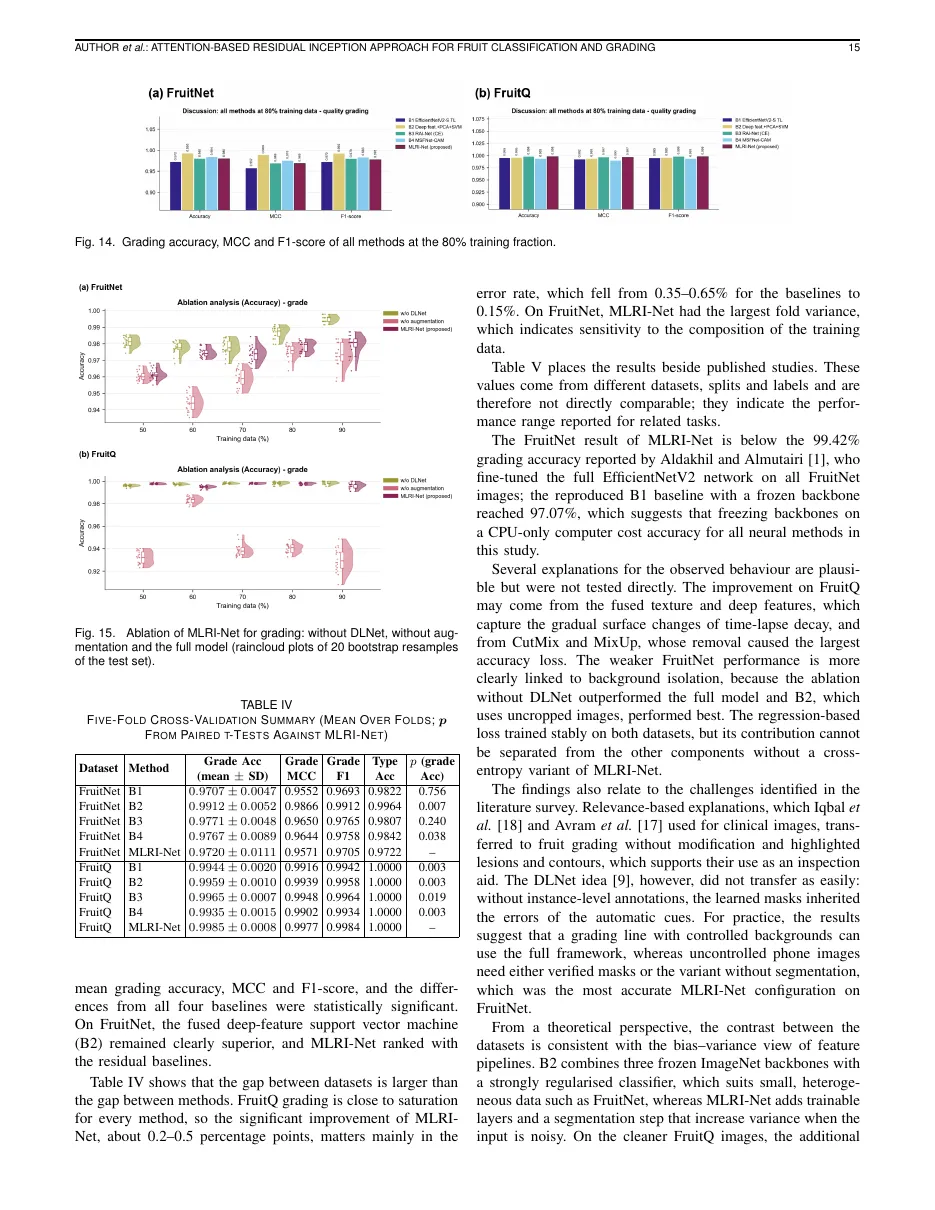
Ablation
Removing the segmentation stage improved the result on one dataset. The paper says so.
The delivered paper
Read all 18 pages here, or jump to the pages that matter.
Loading the PDF… 0%
Files
More samples
- Heart disease detection: A finished EasySeer delivery for a heart-disease detection study on the 303 Cleveland records: a 17-…
Last updated 2026-11-09. EasySeer is AI. It creates only an initial draft from the novel concept you provide, and it is designed to follow academic ethical guidelines.